







We always know February is going to be a huge month after taking the luxury of a summer break. It’s a treat that only those in the southern hemisphere truly have – yet we always under-estimate just how just how much we’ll have to pay in ‘Frantic February’ dollars when we get back. I don’t know about you but I think the prices went up this year, and now we are halfway through Manic March!
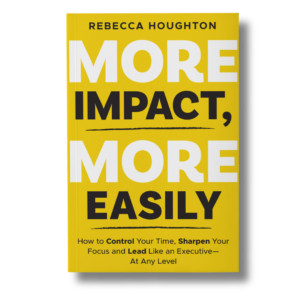
My frantic February was definitely fuelled by “More Impact, More Easily” hitting best-seller status on Amazon – in fact, Amazon RAN OUT of stock at one point.
When it’s feeling frantic or manic – and we all know this is going to catch us out again – here’s when:
- April – this year it’s not actually too bad – we have five working weeks and only two of those are likely to be taken out of contention by Easter and school holidays, and Anzac falls on a Saturday this year. So as a general rule, I’d expect progress to be stalled by only 25%. It’s not about when you’re on holiday – you may not even be taking time off – but typically 30-50% of everyone else will be and that’s going to stall progress. Hope is not a strategy, so put this in your plan.
- May – if you’re running to the June 30 FYE, this is budgets and planning season so you’ll need to factor in about 15% of contingency time for unexpected requests and re-drafts from your finance team. If they have a FYE planning schedule now is the time to know your deadlines – and if you’re not a P+L owner, know your boss’s deadlines. If they get a surprise request from the CFO, so will you.
- December – surprise surprise, Christmas is around the corner. Cue ‘this needs to happen by end of year’ pressure which is, about 80% of the time, purely an emotional, arbitrary deadline driven by the need to tidy up loose ends and enjoy a well-deserved break. So plan for that early – get your loose ends agreed before December even starts so you are not crawling exhausted into your eggnogg (or sparkling shiraz, depending on your hemisphere) on December 18th.
So – let’s all stop knowing this and start acting on this. As one of my favourite smart people, Leah Mether, would say ‘there’s a big difference between knowing and doing”. In a world where AI already knows everything, you’re only really left with doing – so here’s what we will DO.
Regular Ruthless Repriorising
You actually know your busy periods already – it only takes a moment to think through the year ahead, identify the business and personal things that will create a pressure point, to predict your next Frantic February moment. Most of us already know when that next moment will be and yet most of us have already decided our tactic: work harder.
Wrong. You’re already working hard enough.
Work smarter by ruthlessly and regularly reprioritising with 2 simple models:
- Daily – check in with yourself about your standards. Are you responding to every request with the gold standard of what you do? You might be horrified to learn that isn’t what every executive wants from you. So ask them – introduce a gold / silver / bronze standard to your conversation. Do they want a ten page PPT deck response OR do they want three bullet points on a text message. Or the email in the middle of the two? You’d be surprised how often you get a silver or bronze preference when you offer the options. Especially if you say ‘you can have the Gold version on Tuesday, the Silver one tomorrow, or the Bronze one now’.
- Weekly – transfer your to-do list into a to-do matrix. Use the Eisenhower model or something more advanced (there’s an example on page 18 of my new book by the way*). The matrix tells you exactly what tactic to take with each item on the list, so you can delay, schedule, action or negotiate each of them quickly. It stops your brain overloading, and means you’re controlling the pace of work.
- Monthly – use the matrix as a discussion visual in your catch up with your leader to identify trade-offs or support required in the month ahead.
- Quarterly – use it again to engage your stakeholders on challenges, re-prioritise and set realistic expectations.
Instead of worrying about how the work gets done, start influencing what work gets done instead.
_____________________________________________________________________________________________________________________________________________________

Rebecca is Australia’s pre-eminent advocate for B-suite leadership – the expert in developing hi-impact B-Suite leadership at both a team and individual level.
Speak to Rebecca about:
- Individual and group coaching
- Team effectiveness and training
- People & Culture Advisory
-
-
You can reach her on [email protected]